
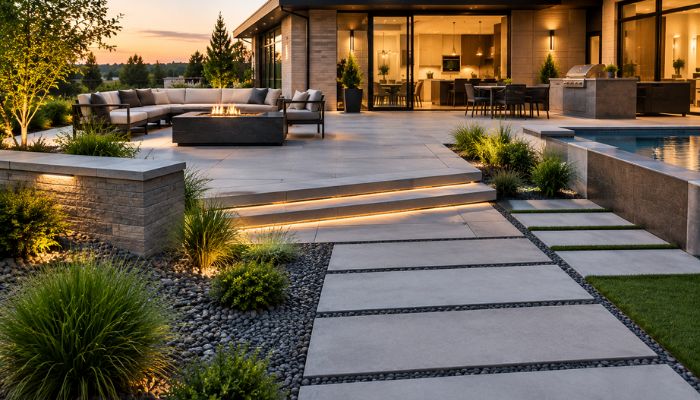
Modern homeowners are transforming their yards into functional, stylish extensions of their living spaces, and hardscaping sits at the center of this shift. From driveways to patios, walkways to entire community landscapes, the right hardscape design boosts curb appeal, increases property value, and creates outdoor areas that families actually use year-round. At JP Companies Inc., we design and install hardscape features that combine durability with contemporary style, and this guide walks you through the trends shaping outdoor spaces today.
Whether you’re planning a driveway upgrade, a custom patio, a paver walkway, or a full community landscape overhaul, this post breaks down what’s trending, why it matters, and how you can apply these ideas to your own property.
Why Hardscape Trends Matter for Your Home
Hardscaping does more than add visual appeal; it solves real problems. A well-designed driveway improves accessibility and safety. A custom patio extends your living space outdoors. Elegant paver walkways guide foot traffic while adding architectural interest. Meanwhile, thoughtfully planned community scapes elevate entire neighborhoods.
Because outdoor renovations represent a significant investment, staying informed about current trends helps you make choices that remain stylish and functional for years to come. Let’s dive into the trends that are defining modern outdoor hardscape design.
1. Large-Format Pavers Are Taking Over
Homeowners are increasingly moving away from small brick and cobblestone pavers in favor of large-format options. These oversized pavers create a sleek, modern look while reducing the number of visible seams, which simplifies maintenance.
Porcelain pavers, in particular, have surged in popularity because they resist staining, fading, and cracking better than traditional concrete. As a result, they’re an excellent choice for driveways, patios, and pool decks that see heavy foot traffic. Concrete large-format pavers remain a budget-friendly alternative, and they still deliver a clean, contemporary aesthetic when installed correctly.
2. Natural Stone Meets Modern Lines
Natural stone continues to hold its place as a timeless hardscape material, but today’s designs pair it with clean, geometric layouts instead of the rustic, irregular patterns of the past. Bluestone, travertine, and limestone all bring unique textures and color variations that add organic warmth to a modern design.
Consequently, homeowners get the best of both worlds: the authenticity of natural stone combined with the crisp lines that define contemporary architecture. This combination works particularly well for custom patios and entryways where you want a sophisticated, high-end appearance.

3. Fire Features Are Becoming Focal Points
Fire pits and linear fireplaces have evolved from optional add-ons into central design elements. Homeowners now build entire patio layouts around a fire feature, incorporating built-in seating, retaining walls, and lighting to create a cohesive gathering space.
Gas-powered fire features are especially popular because they offer instant ignition and consistent heat without the mess of wood-burning options. Additionally, linear fire tables paired with modern hardscape materials like porcelain or large-format concrete create a striking visual contrast that photographs beautifully and adds real value to your outdoor living area.
4. Multi-Functional Outdoor Kitchens Continue to Grow
As families spend more time entertaining at home, outdoor kitchens have become one of the most requested hardscape features. These setups typically include built-in grills, countertops, storage, and sometimes pizza ovens or beverage stations, all anchored by a durable hardscape foundation.
Because outdoor kitchens see constant use and exposure to the elements, choosing the right paving material is essential. Slip-resistant pavers, heat-tolerant stone, and properly graded surfaces ensure the space remains safe and functional for years. Our team at JP Companies Inc. designs outdoor kitchen hardscapes that balance practicality with aesthetics, so your investment performs well and looks great.
5. Permeable and Sustainable Materials Are in High Demand
Sustainability has moved from a nice-to-have to a must-have in outdoor design. Permeable pavers allow rainwater to filter through the surface and into the ground below, reducing runoff and helping homeowners meet local stormwater regulations.
This trend matters even more for driveway installations, where large paved surfaces can otherwise contribute significantly to water runoff. Permeable systems also reduce puddling and ice formation, which improves safety during wet or cold weather. Choosing eco-friendly materials therefore benefits both your property and the surrounding environment.
Learn more: The Biggest Mistakes Homeowners Make When Hiring a Hardscape Contractor
6. Blending Hardscape with Softscape
The sharp divide between hardscape and softscape is disappearing. Designers now integrate plantings directly into paver layouts, use green walls to soften vertical surfaces, and pair water features with stone accents to create a more natural, layered look.
This blended approach softens the harder edges of stone and concrete while still delivering the durability and low maintenance that hardscaping provides. Built-in planters along a walkway or a retaining wall, for example, add color and texture without sacrificing structural integrity.
7. Minimalist and Geometric Layouts Dominate Modern Design
Clean lines, symmetry, and intentional use of negative space define the minimalist hardscape movement. Rather than filling every inch of a patio or walkway, designers now leave open areas that create visual breathing room and highlight the quality of the materials used.
This trend pairs naturally with large-format pavers and monochromatic color schemes, since fewer visual distractions allow the architecture of the space to stand out. Homeowners who prefer a sleek, uncluttered aesthetic gravitate toward this style for driveways, patios, and entryways alike.

8. Warm, Textured Mediterranean Influences Offer a Counter-Trend
While minimalism dominates much of modern design, a growing number of homeowners are embracing warmer, more textured looks inspired by Mediterranean architecture. This style favors earthy tones, tumbled stone edges, and slightly irregular paver patterns that feel inviting rather than sterile.
Because this trend emphasizes coziness and character, it works particularly well for backyard patios and outdoor dining areas where comfort takes priority over strict geometric precision.
9. Smart Lighting and Technology Integration
Outdoor spaces are becoming smarter. Homeowners now embed LED lighting directly into paver edges, steps, and retaining walls, then control these features through smartphone apps. This technology enhances safety after dark while adding a dramatic visual effect that highlights the hardscape’s architecture.
Beyond lighting, some homeowners integrate smart irrigation systems and sensors into their hardscape planning from the start, ensuring the entire outdoor space functions efficiently as a connected system.
10. Choosing the Right Trend for Your Property
Not every trend suits every home, so it’s important to weigh your budget, climate, and personal style before committing to a design. A large-format porcelain patio might make sense in a mild climate, while a region with harsh winters may benefit more from durable, freeze-resistant natural stone.
Working with an experienced local team ensures your hardscape choices align with both current trends and long-term practicality. At JP Companies Inc., we help homeowners across the region evaluate their options and select materials that perform well in local conditions while still achieving a modern, trend-forward look. For more information about our services, visit our Google Business Profile.
Our Core Hardscape Services
JP Companies Inc. offers a full range of hardscape solutions designed to bring these trends to life on your property:
- Driveways Installation — durable, attractive driveways built with modern paving materials that improve curb appeal and withstand daily wear.
- Custom Patio Installation — personalized patio designs that incorporate today’s top trends, from fire features to multi-functional layouts.
- Elegant Paver Walkways — beautifully designed pathways that guide foot traffic while enhancing your landscape’s overall aesthetic.
- Signature Community Scapes — large-scale hardscape design for neighborhoods and communities, creating cohesive, attractive shared spaces.
Each of these services reflects the trends outlined above, and our team stays current with material innovations and design techniques so your project looks modern for years to come.
Key Points to Remember
- Large-format pavers reduce visible seams and simplify long-term maintenance.
- Porcelain pavers resist staining and fading better than many traditional materials.
- Natural stone paired with geometric layouts creates a balanced, modern-yet-organic look.
- Fire features now serve as central design anchors rather than afterthoughts.
- Outdoor kitchens require slip-resistant, heat-tolerant materials for safety and durability.
- Permeable pavers help manage stormwater and meet local drainage requirements.
- Blending plantings into hardscape layouts softens the overall design.
- Minimalist, geometric patios highlight material quality through clean lines and open space.
- Mediterranean-inspired textures offer a warmer alternative to strict minimalism.
- Smart lighting integration improves safety and adds visual drama after dark.
Frequently Asked Questions
1. What is the most popular hardscape trend for driveways this year?
Large-format pavers, especially porcelain and concrete options, remain the top choice for driveway installations because they offer a modern look, resist wear from vehicle traffic, and require less maintenance than smaller paver styles.
2. How much does a custom patio installation typically cost in my area?
Costs vary based on material choice, patio size, and design complexity, including features like fire pits or outdoor kitchens. Contacting a local hardscape company such as JP Companies Inc. for a site visit and personalized quote gives you the most accurate estimate for your specific property.
3. Are permeable pavers a good option for homes in areas with heavy rainfall?
Yes, permeable pavers work especially well in regions with heavy rainfall because they allow water to filter through the surface, reducing runoff, puddling, and pressure on local storm drains. This makes them a smart, sustainable choice for driveways and patios alike.
4. How long does it take to install a paver walkway?
Most residential paver walkway installations take a few days to a week, depending on the walkway’s length, the complexity of the design, and site preparation needs. A local contractor can provide a more precise timeline after assessing your property.
5. Can hardscape designs be customized for entire neighborhoods or communities?
Absolutely. Signature community scapes allow developers and homeowner associations to create cohesive, attractive shared spaces, including entryways, walking paths, and common areas, all designed with consistent materials and style.
Final Thoughts
Outdoor hardscape design continues to evolve, blending sustainability, technology, and style into functional spaces that families actually enjoy using. From large-format pavers and fire features to permeable materials and smart lighting, these trends reflect a broader shift toward outdoor spaces that work as hard as they look good.
If you’re ready to upgrade your driveway, install a custom patio, add an elegant paver walkway, or plan a signature community scape, JP Companies Inc. is here to help. Our team combines local expertise with up-to-date design knowledge to bring these modern trends to life on your property. Reach out today to schedule a consultation and start planning your next outdoor project.
