
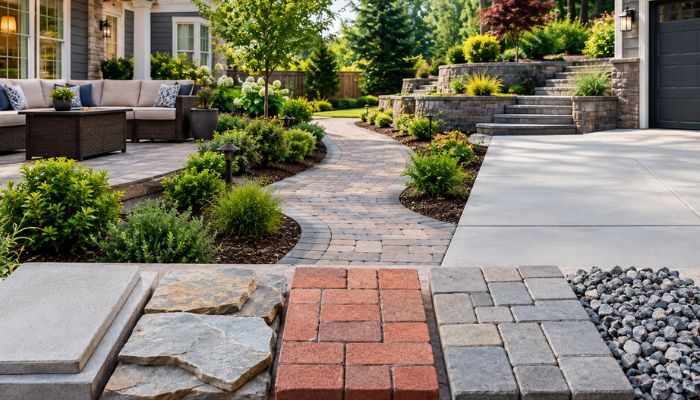
Your outdoor space should do more than look good—it should stand up to everything Northern Virginia weather can throw at it.
From freezing winter temperatures and spring rain to humid summers and changing fall conditions, outdoor surfaces in Northern Virginia experience plenty of seasonal stress. That makes choosing the right materials one of the most important decisions in any patio, walkway, driveway, retaining wall, or outdoor living project.
But with so many choices available, how do you know which material is right for your property?
Why Material Selection Matters in Northern Virginia
Northern Virginia’s four-season climate creates challenges for outdoor surfaces. Water can enter small spaces within a material or its joints. When temperatures drop below freezing, that water expands. Repeated freezing and thawing can contribute to cracking, shifting, or surface deterioration.
Rainfall and drainage are also important. Poorly directed water can collect around patios, walkways, retaining walls, and foundations, potentially creating larger problems over time.
That is why choosing Hardscape Materials should involve more than selecting a color or pattern. Homeowners should consider durability, drainage, maintenance, installation requirements, appearance, and long-term value.
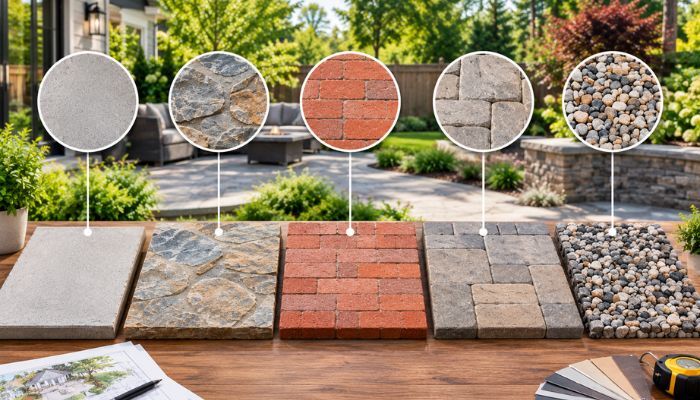
5 Popular Hardscape Materials for Northern Virginia
1. Concrete: Practical and Customizable
Concrete remains a popular choice because it combines versatility with functionality. It can be customized with colors, textures, decorative patterns, borders, and stamped finishes. Stamped concrete can even create the appearance of natural stone or brick.
Concrete works well for patios, driveways, walkways, steps, and pool surrounds. Proper grading, reinforcement where needed, control joints, and a well-prepared base are important for reducing potential cracking and water-related issues.
2. Natural Stone: Timeless and Distinctive
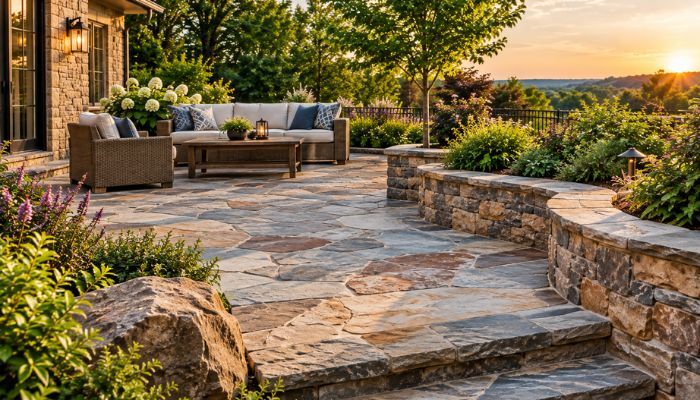
Natural stone can give an outdoor space an elegant, organic character. Flagstone, bluestone, granite, and other stones can be excellent choices for Custom Patio Installation, walkways, steps, and walls.
Every piece has natural variations in color, texture, and pattern, creating a distinctive finished look. Bluestone is often selected for patios and walkways because of its attractive blue-gray appearance and durability.
3. Brick: Classic and Charming
Brick is an excellent match for traditional and Colonial-style homes. Its warm appearance can make patios, pathways, garden borders, steps, and driveways feel inviting and established.
Brick can also be installed in patterns such as herringbone and running bond to create unique visual effects. Individual bricks can generally be replaced when necessary, making localized repairs practical.
4. Pavers: Flexible and Practical
Pavers are popular for patios, walkways, driveways, pool areas, and outdoor entertaining spaces. They come in numerous colors, sizes, shapes, textures, and patterns, giving homeowners considerable design flexibility.
A major advantage is repairability. If one paver becomes damaged or stained, it can often be removed and replaced without disturbing the entire surface.
Proper base preparation, compaction, drainage, and installation are essential for good performance through seasonal temperature changes.
5. Gravel and Crushed Stone: Simple and Functional
Gravel and crushed stone work well for garden paths, fire pit areas, drainage zones, and other landscape applications. They can provide a relaxed, natural appearance while often requiring less upfront investment than solid surfaces.
Loose stone can move over time, especially in high-traffic areas or places exposed to heavy rainfall. Edging and occasional replenishment can help maintain a neat appearance.
Retaining Wall Materials
Hardscaping is not limited to patios and pathways. Retaining walls can create usable levels on sloped properties, define planting areas, manage erosion, and add visual structure.
Common choices include natural stone, concrete retaining wall blocks, brick, and manufactured wall systems.
Retaining walls require more than attractive materials. Proper drainage, grading, foundation preparation, and structural planning are important, particularly for taller walls. Professional installation can help ensure the wall performs as intended.
Learn more: Top Outdoor Hardscape Design Trends for Modern Homes
How Do You Choose the Right Material?
There is no single material that works perfectly for every Northern Virginia property. Consider these questions before making a decision.
What will the area be used for?
A driveway needs to handle vehicle traffic, while a garden path may only need to support pedestrians.
How much maintenance are you comfortable with?
Some materials require more cleaning, sealing, joint maintenance, or replenishment.
What style matches your home?
Brick can complement traditional architecture, while modern pavers or concrete can create a contemporary appearance.
What is your budget?
Consider both installation expenses and long-term maintenance rather than focusing only on the initial price.
How will water move through the property?
Drainage should be part of the design from the beginning.
Why Professional Installation Matters
Even quality materials can underperform when installed incorrectly. A durable project starts below the visible surface with appropriate excavation, grading, base preparation, compaction, drainage, and installation techniques.
This is particularly important in Northern Virginia, where seasonal temperature changes can place additional stress on outdoor surfaces.
JP Companies Inc. understands that successful hardscaping requires thoughtful design and careful construction. From material selection to site preparation, every stage contributes to the final result.
Making Your Investment Last
Keep surfaces clear of leaves and debris, watch for standing water, and inspect your hardscape after winter.
Depending on the material, sealing may provide additional protection against moisture and stains. Paver joints may need occasional attention, while natural stone may benefit from periodic cleaning or sealing.
Build an Outdoor Space You’ll Enjoy for Years
The best outdoor spaces combine beauty with practicality for lasting performance and appeal. Natural stone offers distinctive character, brick provides classic charm, pavers offer flexibility, concrete delivers versatility, and gravel creates a relaxed appearance.
With quality materials, proper drainage, thoughtful planning, and professional installation, your hardscape can become a lasting feature of your home.
JP Companies Inc. can help homeowners explore options and create outdoor spaces designed around their property’s needs.
Visit our GBP to learn more about our services, view business information, and discover what local customers are saying.
Ready to Transform Your Outdoor Space?
Whether you are planning a patio, walkway, driveway, retaining wall, or complete outdoor living area, choosing the right material is an important first step.
Contact us today to discuss your project and explore hardscape solutions suited to your Northern Virginia property.
Frequently Asked Questions
1. What are the most popular hardscape materials in Northern Virginia?
Concrete, natural stone, brick, pavers, and gravel are commonly considered options. The right choice depends on use, design, site conditions, maintenance expectations, and budget.
2. Are pavers suitable for Northern Virginia’s freeze-thaw cycles?
Properly installed pavers can perform well in seasonal weather. A prepared base, appropriate drainage, and professional installation help minimize shifting and related problems.
3. Which material is best for a patio?
There is no universal answer. Natural stone offers a distinctive appearance, pavers provide design flexibility, and concrete offers customization. Your style, budget, maintenance expectations, and property conditions should guide the choice.
4. How often should hardscaping be maintained?
Maintenance varies by material and usage. Routine cleaning and seasonal inspections are useful. Some surfaces may also need periodic sealing, joint maintenance, or replacement of individual components.
5. Why is drainage important for hardscape projects?
Good drainage directs water away from surfaces and structures. Poor drainage can contribute to standing water, erosion, shifting materials, and other long-term problems. Proper grading and drainage should be addressed during design and installation.
