

A well-planned walkway does more than connect one part of a property to another. It can define the character of an outdoor space, improve accessibility, guide movement, and create a polished transition between architecture and landscaping. Careful planning is especially important when creating a contemporary outdoor pathway because the right combination of materials, proportions, drainage, and landscaping can significantly influence the finished result.
A modern paver walkway can provide a clean and sophisticated appearance while offering practical benefits for everyday use. However, achieving the right balance between appearance and performance requires more than simply selecting attractive pavers. The layout, surface preparation, drainage strategy, edging, and maintenance requirements should all be considered before installation begins.
For homeowners and property owners planning an upgraded outdoor pathway, understanding these factors can make the project more functional and visually cohesive.
Start With the Purpose of the Walkway
Before selecting pavers or patterns, determine how the walkway will be used. A pathway leading from a driveway to a front entrance may require a different layout than a garden path connecting outdoor seating areas.
Consider questions such as:
- How many people will regularly use the walkway?
- Will it accommodate occasional carts or equipment?
- Does it need to connect multiple outdoor areas?
- Will it be used primarily during the day or at night?
- Does the property have slopes or drainage concerns?
- Should the walkway complement an existing landscape design?
Answering these questions helps establish the appropriate width, alignment, materials, and construction approach.
Choose a Layout That Complements the Property
The layout is one of the most noticeable elements of walkway design. Straight lines can create a crisp architectural appearance, while gentle curves can make larger landscapes feel more natural.
For contemporary properties, simple geometric layouts often work well. Large-format pavers, linear arrangements, and restrained patterns can create visual continuity with modern architectural features.
The walkway should also have a logical relationship with doors, driveways, patios, gardens, and other hardscape elements. Avoid creating unnecessary turns or narrow sections that make the pathway difficult to navigate.
Select Materials for Both Appearance and Performance
Pavers are available in numerous materials, sizes, textures, colors, and finishes. Choosing the right option requires consideration of both aesthetics and practical performance.
Concrete pavers can provide versatility in color and pattern. Natural stone can offer distinctive textures and variations, while porcelain pavers can create a sleek contemporary appearance when appropriate installation methods are used.
When evaluating materials, consider:
| Factor | What to Consider |
| Appearance | Color, texture, finish and architectural style |
| Durability | Expected traffic and environmental exposure |
| Maintenance | Cleaning, joint care and potential repairs |
| Installation | Base requirements and installation complexity |
| Drainage | Surface slope and water-management needs |
| Budget | Material, preparation and installation costs |
A professional design approach considers the entire system rather than choosing a material based solely on appearance.
Plan Drainage before Installation
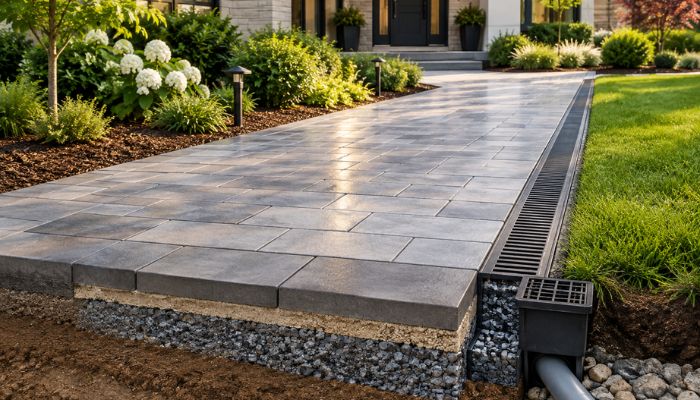
Drainage is one of the most important considerations in walkway planning. Water that remains on the surface or collects along edges can contribute to staining, erosion, joint deterioration, settlement, and other problems.
The walkway should be designed with appropriate slope so water can move away from the walking surface and toward a suitable drainage area. Existing site conditions should also be reviewed before construction.
Properties with challenging grades may require additional drainage solutions. Depending on the site, these can include channels, drains, permeable surfaces, grading adjustments, or carefully designed runoff paths.
Planning drainage at the beginning is generally more effective than attempting to correct water-management problems after the walkway has been installed.
Build a Stable Foundation
A beautiful surface cannot compensate for an inadequate foundation. Proper preparation of the subgrade and base is essential for creating a stable walkway that performs well over time.
The installation process may involve removing unsuitable soil, preparing the subgrade, installing an appropriate aggregate base, compacting the layers, and creating a suitable bedding surface.
The exact construction requirements depend on local soil conditions, climate, drainage, expected loads, and selected materials.
Poor preparation can contribute to uneven surfaces, shifting pavers, cracked areas, and settlement. This is why experienced installation and careful site preparation are important parts of the planning process.
Learn more: High-End Pavers Walkway Ideas Inspired by Luxury Landscapes
Create Visual Continuity with Landscaping
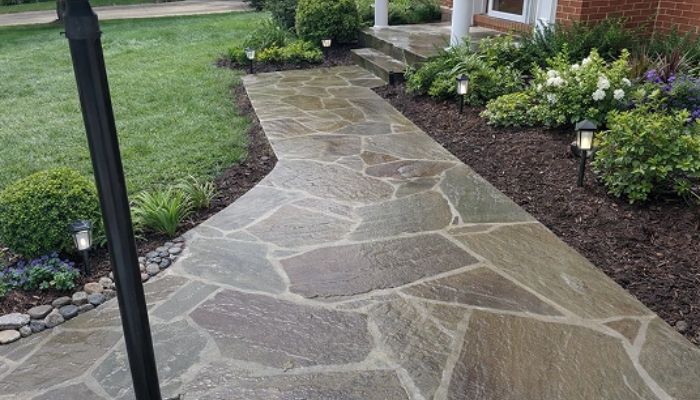
A walkway should not appear disconnected from the surrounding landscape. Plants, garden beds, retaining walls, lighting, and other outdoor features can be integrated into the overall design.
For example, planting beds along the edges can soften hardscape lines, while carefully positioned landscape lighting can improve nighttime visibility and highlight the pathway.
The color of the pavers can also be coordinated with the home’s exterior, outdoor walls, fencing, or other hardscape features. Neutral tones can create a restrained contemporary appearance, while contrasting materials can make the walkway more visually prominent.
JP Companies Inc. can help property owners consider how hardscape and landscape elements work together as part of an overall outdoor design.
Consider Walkway Width and Proportions
Proportion has a major influence on both usability and appearance. A pathway that is too narrow may feel restrictive, while an oversized walkway can overwhelm a small landscape.
Think about the expected traffic and surrounding features when establishing dimensions. A primary entrance walkway may need more space than a secondary garden path.
Transitions should also be considered carefully. Changes between different paver sizes, materials, or adjacent surfaces should look intentional rather than abrupt.
Add Edging for a Defined Finish
Edging can help establish clean boundaries between pavers and surrounding landscape materials. It can also contribute to the structural stability of the installation by helping keep the paving system properly contained.
For a contemporary design, simple and visually restrained edging often works well. The selected edging material should complement the pavers rather than compete with them.
Well-defined edges can also simplify future maintenance by separating the walkway from planting areas, mulch, gravel, or lawn.
Think About Long-Term Maintenance
Every paving material has maintenance requirements. Regular cleaning can help preserve appearance, while periodic inspection can identify minor issues before they become more significant.
Look for signs such as:
- Uneven or settled pavers
- Damaged joints
- Persistent standing water
- Cracked or broken units
- Weed growth between joints
- Deteriorating edges
Addressing these issues early can help extend the service life of the walkway and maintain its appearance.
A planned maintenance routine should be considered when selecting materials. A visually impressive surface that requires more maintenance may not be suitable for every property or lifestyle.
Make Sustainability Part of the Design
Modern walkway planning can also incorporate sustainable design principles. Depending on the project, permeable paving systems can help manage stormwater by allowing water to move through the surface into the underlying system.
Landscaping can further support water management by incorporating suitable planting areas and reducing unnecessary runoff.
Sustainable choices should be based on actual site conditions and local requirements rather than appearance alone.
Work With an Experienced Paving Professional
Planning a walkway involves multiple decisions, from layout and materials to drainage and foundation preparation. Working with an experienced professional can help identify potential site challenges before construction begins.
JP Companies Inc. can assist property owners in developing outdoor paving solutions that consider aesthetics, functionality, durability, and site conditions.
Whether the project involves a front entrance, garden pathway, backyard connection, or larger landscape renovation, careful planning can make the finished walkway more cohesive and practical.
Final Thoughts
A successful walkway should look attractive while also performing reliably under everyday conditions. The most effective designs consider the property’s architecture, landscape, drainage, traffic requirements, materials, foundation, and future maintenance together.
A carefully designed modern paver walkway can become more than a practical route between spaces. It can serve as an architectural feature that improves curb appeal, organizes the landscape, and creates a welcoming transition into the property.
By prioritizing beauty, function, drainage, and long-term performance from the beginning, property owners can make more informed decisions and create outdoor spaces that remain useful and visually appealing for years.
For professional assistance with your next paving or outdoor improvement project, Contact us to discuss your requirements. You can also visit our GBP to learn more about JP Companies Inc., services, and local customer information.
Frequently Asked Questions
1. What makes a walkway modern?
Modern walkways commonly emphasize clean lines, simple geometric layouts, coordinated colors, minimal patterns, and contemporary materials. The design should also complement the architecture and surrounding landscape.
2. How important is drainage for a paver walkway?
Drainage is extremely important because standing water can contribute to erosion, staining, settlement, joint deterioration, and other surface problems. Proper grading and site planning should be considered before installation.
3. What paver pattern works well for contemporary properties?
Simple layouts such as linear arrangements, running bond, stack bond, and selected modular patterns can complement contemporary architecture. The best pattern depends on the paver dimensions and overall landscape design.
4. How can I make a walkway more functional?
Start by determining how the walkway will be used. Consider appropriate width, smooth transitions, lighting, drainage, durable materials, stable construction, and accessibility when developing the design.
5. How can I maintain a modern paver walkway?
Regular sweeping and cleaning, checking joints, removing weeds, inspecting for settlement, and addressing drainage problems early can help preserve the walkway. Specific maintenance requirements depend on the paving material and installation system.
