
Driveway Styles & Customization
Driveway Installation Finish Options
-
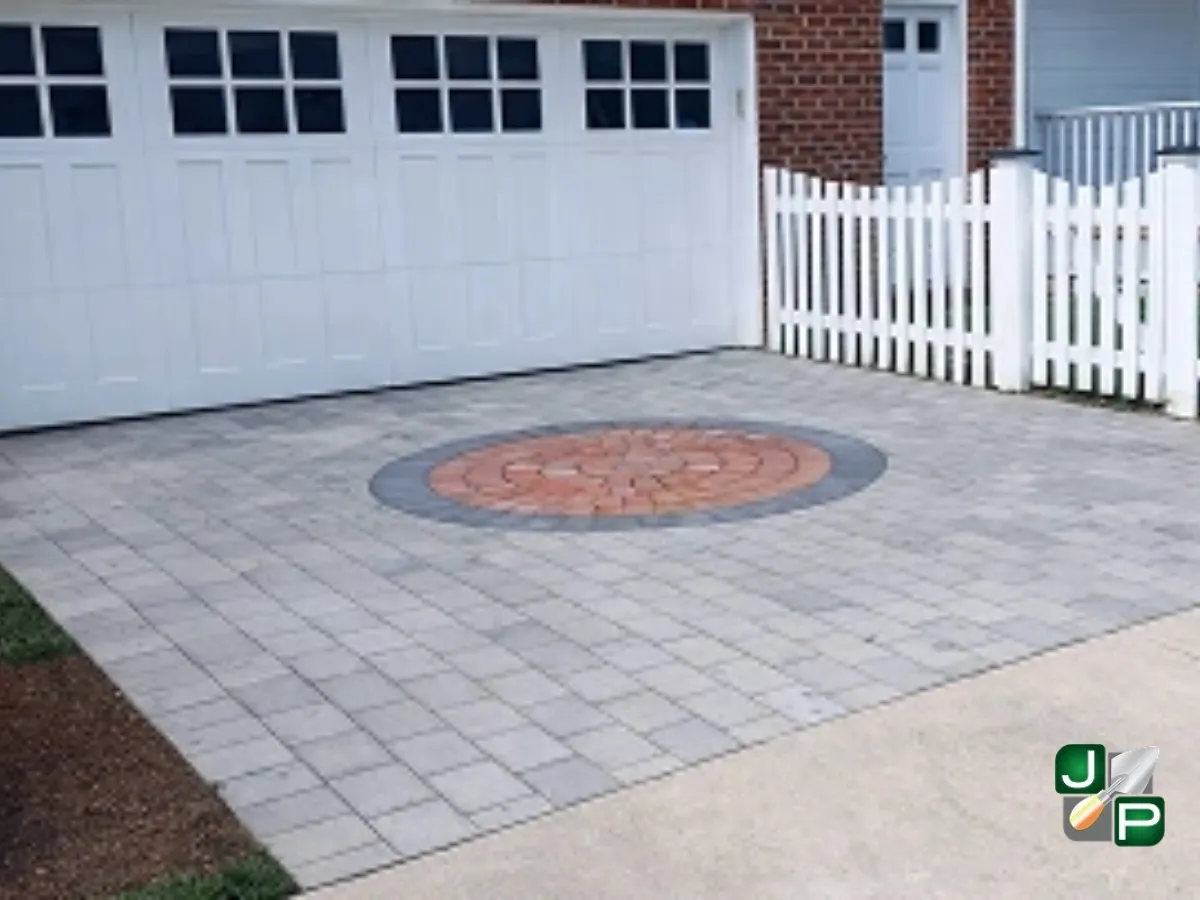
Decorative Concrete Pavers
Concrete pavers in many colors and patterns, as a whole driveway or a border.
-
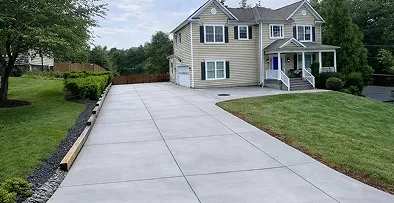
Standard Broom Finish
A timeless, cost-effective, and slip-resistant surface ideal for residential and light commercial applications.
-
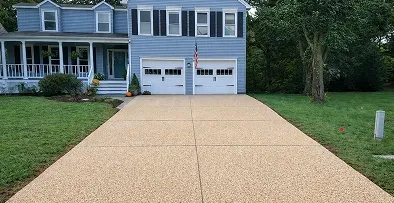
Exposed Aggregate
The top layer is washed off to show the stone in the mix, which grips well underfoot.
-
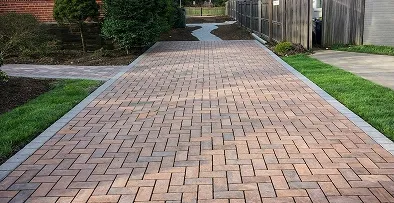
Permeable Pavers
Sustainable paving systems engineered for effective drainage, water control, and environmental responsibility.

Explore Our Creations
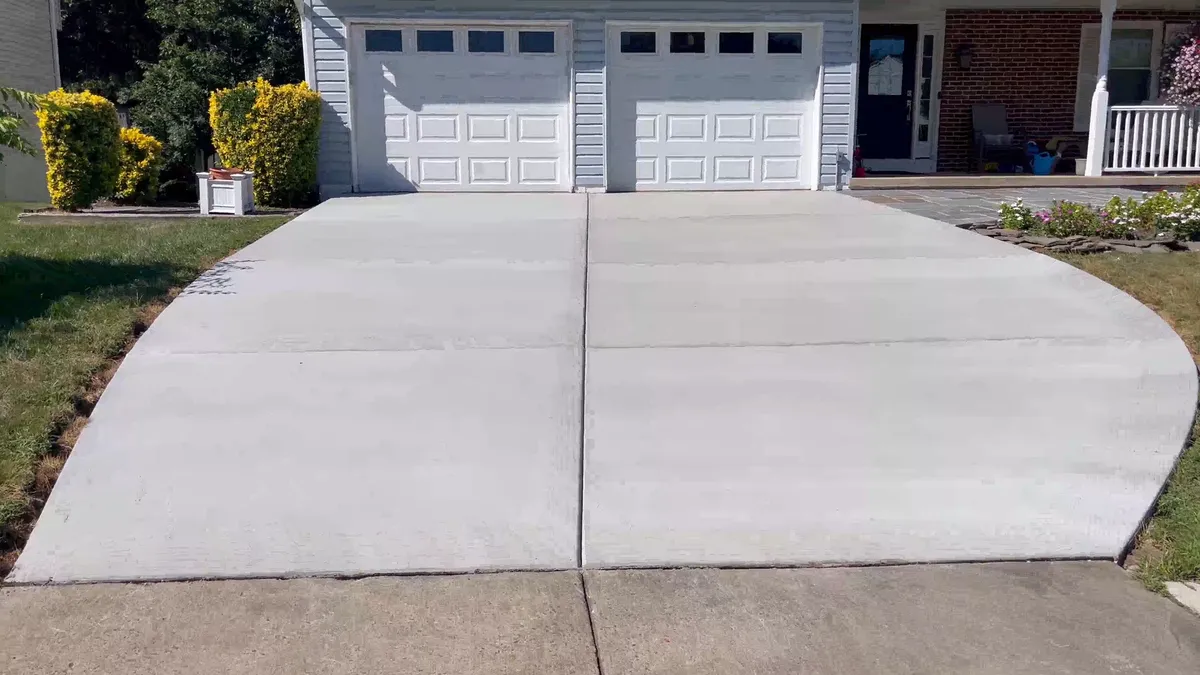 Concrete driveway with flared sides and a flagstone walkwayNew concrete driveway with flared sides and a center control joint leading to a white two-car garage, with a flagstone walk by the front porch.
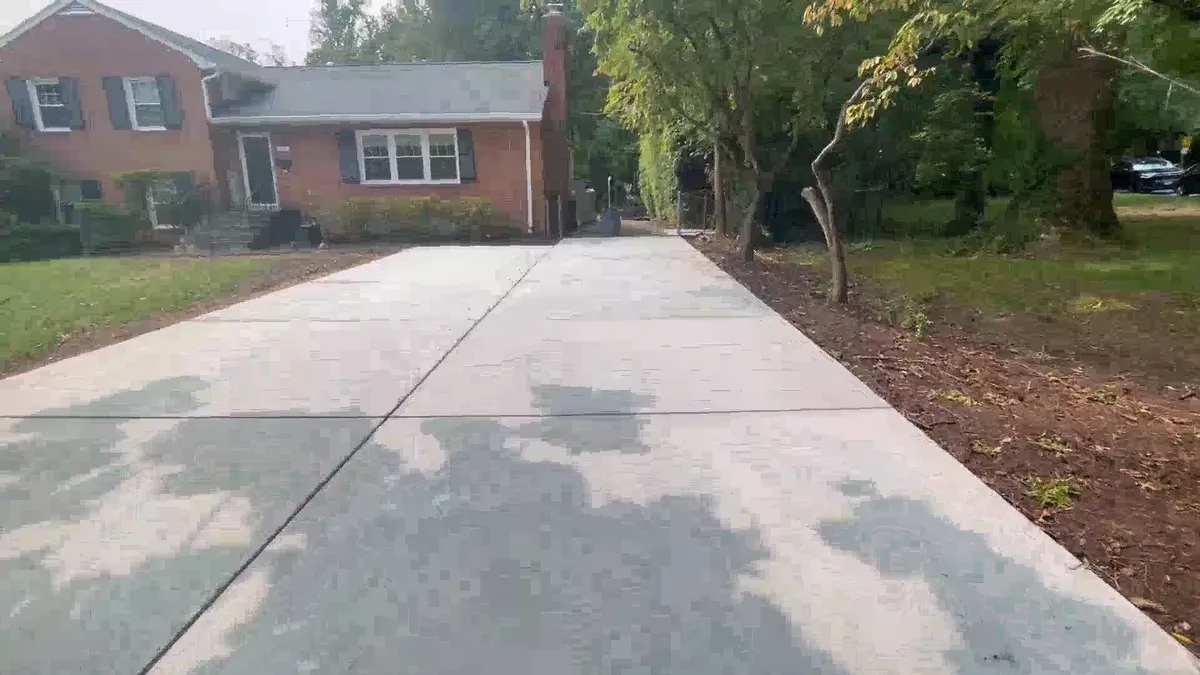 Long concrete driveway and flagstone steps at a brick houseLong new concrete driveway with control joints running past a brick house, with trees and fresh mulch along one side.
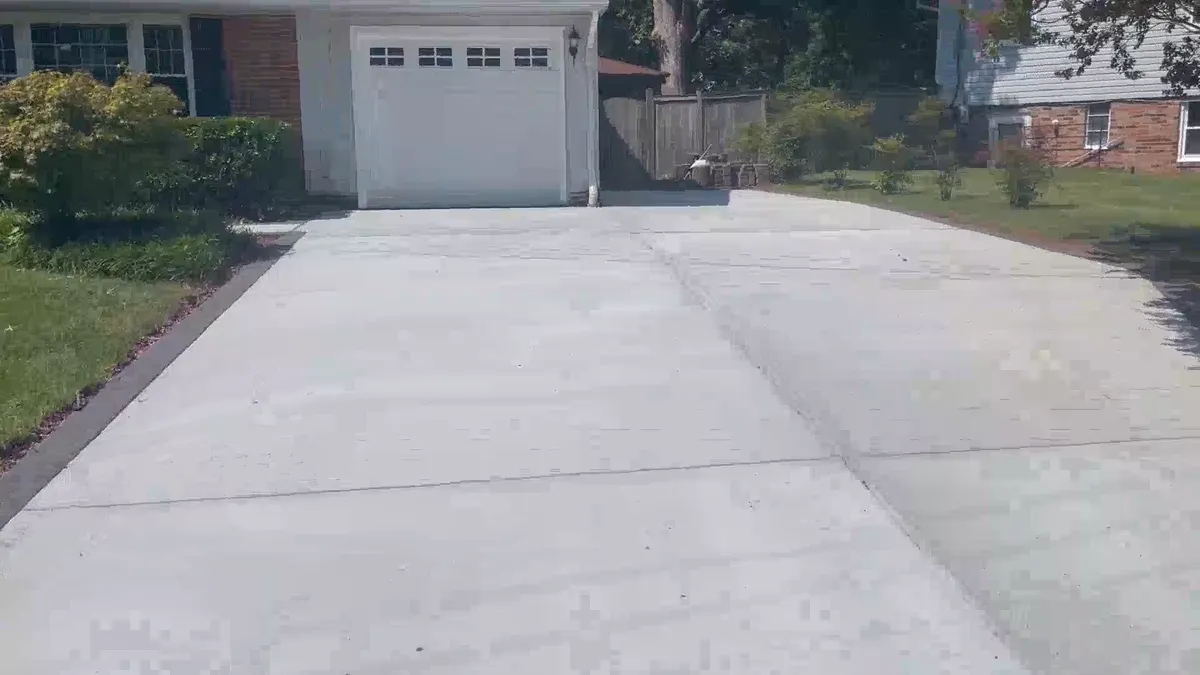 Concrete driveway to a one-car garageWide new concrete driveway with control joints leading to a white one-car garage on a brick house.
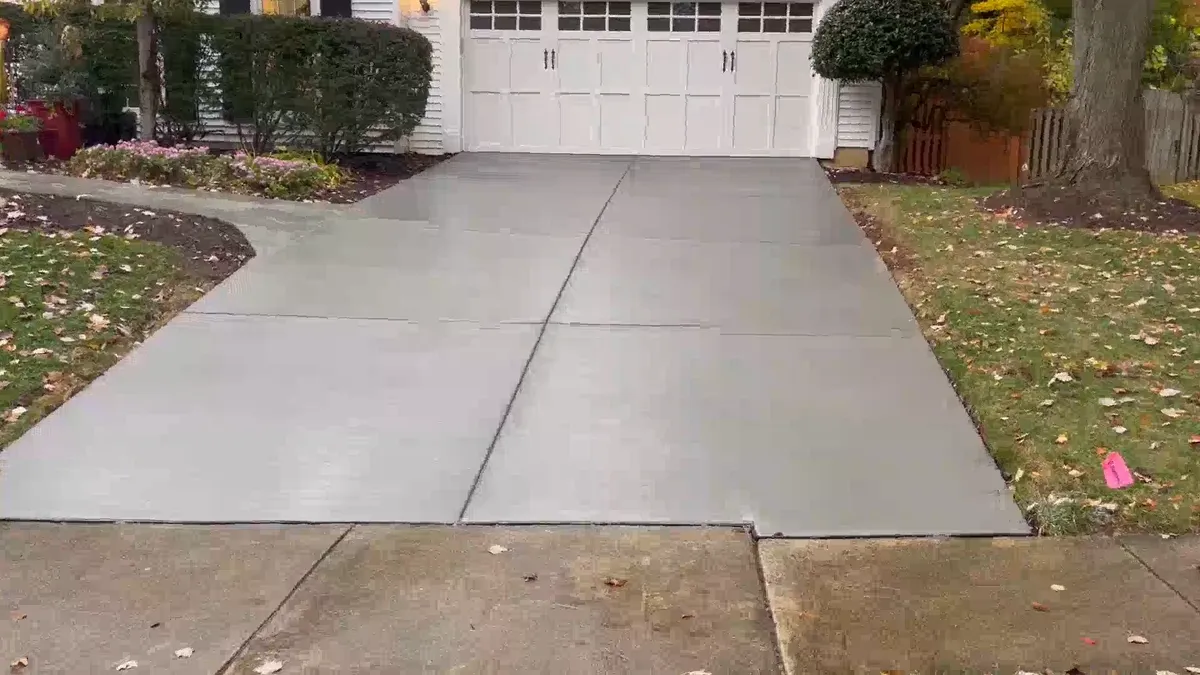 Concrete driveway and curved flagstone walkwayNew concrete driveway with control joints leading to a white carriage-style garage door, with a branch toward the front walk and fall leaves on the lawn.
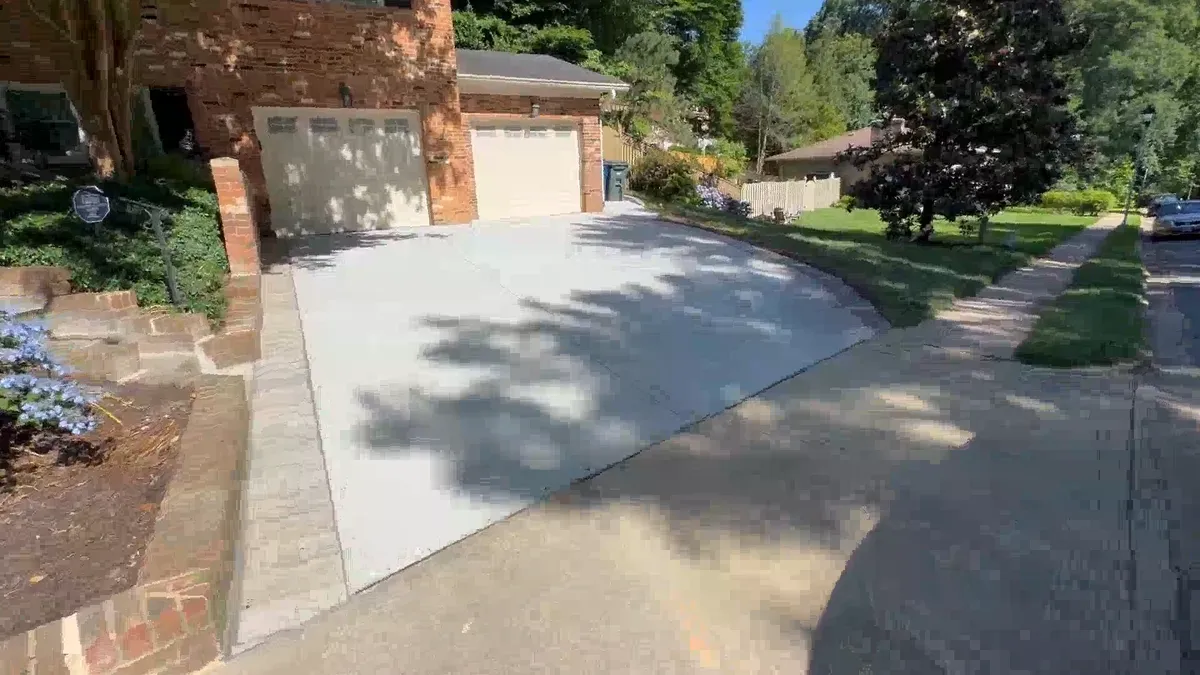 Concrete driveway with a paver edge at a brick houseNew concrete driveway with a paver edge along a brick wall, leading to two garage doors on a brick house, in dappled shade.
À La Carte Enhancements
A new driveway can be more than a plain slab. A decorative brick or concrete border frames it and ties it to the house, and custom scoring patterns and edge details give the surface a finished look.
Low-voltage lighting set along the edges makes the driveway easier to use after dark, and professionally installed surface drainage keeps water moving away from the garage and the house.
The JP Standard
Our 12-Step Professional Installation Process
01 Miss Utility
We call Miss Utility (811) to mark every utility before any digging.
02 Design Prep
Layout and spray paint new driveway design with customer
03 Tear-Out and Haul-Away
Complete removal and hauling of existing asphalt or concrete surfaces.
04 Excavation
Sub-grade preparation using modern excavation equipment.
05 Form Boards
Professional form boards installed for precise layout and optimal drainage.
06 Compacted Stone Base
Installation of a 2–4” compacted base of 21A or 57 stone.
07 High-Strength Pour
4,000 PSI concrete poured at a standard 4” depth.
08 Wire Mesh and Garage Tie-In
Install 6" x 6" welded wire mesh. Tie into existing garage slab using #4 rebar (where applicable).
09 Crack Mitigation
Control joints cut every 8–10 feet, so cracks form in the joints.
10 Expansion Joints
Placed so the concrete can move as the temperature changes.
11 Broom Finish
Slip-resistant broom (brushed) finish applied for safety and durability.
12 Cleanup
Complete debris removal and job-site safety secured with cones and caution tape.
Concrete Driveway Replacement in One to Two Days
Most driveway replacements take one to two days on site. In that time the old asphalt or concrete is broken out and hauled away, the ground is prepared, the form boards go in, the stone base is compacted, and the new concrete is poured, finished and jointed. The work area is then closed off with cones and caution tape while the concrete cures.
You can walk on the new driveway after 24 hours. Wait 7–10 days before driving on it, so the concrete has time to gain strength before it carries the weight of a car.
What Is Under and Inside Your New Driveway
Compacted Stone Base
2–4” of 21A or 57 stone, compacted, so the slab sits on a firm, even base.
4,000 PSI Concrete, 4” Thick
PSI is the strength the concrete reaches as it cures, in pounds per square inch.
Welded Wire Mesh
6” x 6” welded wire mesh in the slab helps hold the driveway together.
Tie-In to the Garage
Where the new driveway meets an existing garage slab, #4 rebar ties the two together, where applicable.
Control Joints
Cut every 8–10 feet, so the concrete cracks along the joint lines instead of across the driveway.
Expansion Joints
Placed to give the concrete room to move as the temperature changes.
What Are 21A and 57 Stone?
JP Companies uses one of two crushed stones under a driveway: 21A or 57. 21A is a mix of crushed stone and stone dust that packs into a dense, firm layer when it is compacted; 57 stone is clean crushed stone, about three-quarters of an inch, with no dust, so water drains through it.
Either one gives the slab an even bed that does not shift with the soil underneath. JP Companies lays 2–4” of 21A or 57 stone and compacts it before any concrete is poured.
Concrete or Asphalt: Which Driveway Lasts Longer?
A concrete driveway generally lasts longer than an asphalt one and needs less upkeep. Asphalt softens in summer heat, needs sealcoating every few years and wears at the edges; concrete stays rigid, stays lighter in color and cooler in the sun, and a JP Companies concrete driveway typically lasts 25–30 years with standard homeowner care.
Replacing an asphalt driveway with concrete is a common job: the asphalt is broken out and hauled away, and the new concrete driveway is built on a fresh stone base.

Repair or Replace? Signs a Driveway Needs Replacing
A driveway needs replacing, not patching, when the damage goes below the surface. Cracks wider than a coin, or ones that keep growing year after year, mean the slab or its base has failed. So do panels that have dropped or lifted at a joint, which leave trip edges and catch snow shovels.
Water tells the same story. Standing water after a rain points to a slope that was set wrong or a base that has settled. Widespread scaling, where the top layer flakes away, rarely stops once it starts, and broken edges along the lawn usually mean the base underneath has washed out.
Widening or Expanding Your Driveway
A replacement is the best time to make a driveway wider or longer, whether for a second car, easier turning or more room to park.
Before any digging, Miss Utility (811) marks the utilities, and the new layout is spray-painted on the ground with you, so you can see the size and shape of the new driveway before the old one comes out.

A New Driveway and Walkway at the Same Visit
Most JP Companies jobs are a new driveway with a new walkway to the front door. The walk is laid out with the driveway so the two meet cleanly.
The walkway can be concrete, or a new concrete base finished in pavers, flagstone, travertine or marble, often with stone front steps. All of it is on our walkways and front steps page.

Hairline Cracks: What Is Normal
All concrete expands and contracts. Control joints guide that movement, and minor hairline cracks may still appear in 10–20% of pours. They show the joints are doing their job, not that the driveway is failing.
Our warranty does not cover hairline cracks under 1/4” in width or vertical displacement, because they are a natural characteristic of concrete. Salt and chemical de-icers void the warranty. Our Understanding Concrete guide explains cracks, curing and winter care in more detail.
Caring for a New Concrete Driveway
A new concrete driveway needs very little. In warmer months, lightly mist the surface for 3–5 minutes twice a day during the first weeks to support proper curing.
In winter, skip the salt and chemical de-icers; play sand or kitty litter gives traction without damaging the surface. A light pressure wash with a mild cleaner, such as Dawn, every few years keeps it looking new. Sealing is optional for standard concrete, and a sealer can become slippery and needs reapplying to stay effective.
Why Choose Us
JP Companies builds driveways to look right from the street and to last through Northern Virginia’s hot summers and freeze-thaw winters.
Every JP Companies driveway starts with careful site evaluation and layout planning, so the slope, the drainage and the shape are right before any concrete is poured. The finished driveway is built with proper grading, a compacted stone base and planned drainage, built to carry daily traffic for decades.
What does a new driveway cost? Our driveway cost guide gives current ranges by material, and the seven signs a driveway needs replacing help you decide when.

Driveway Care & Common Questions
When can I walk or drive on the new surface?
Pedestrian traffic is safe after 24 hours. Please wait 7–10 days before driving on the surface.
Should I water the new concrete?
Yes. Especially during warmer months, lightly mist the surface for 3–5 minutes twice daily to support proper curing.
Can I use salt or ice-melt chemicals?
No. Salt and chemical de-icers are not recommended and will void the warranty. Use play sand or kitty litter for traction.
What maintenance is required?
Very little. JP Companies recommends light pressure washing with a mild cleaner (such as Dawn) every few years.
Should I seal my driveway?
Sealing is optional for standard concrete. While it offers benefits, it may become slippery and requires reapplication to remain effective.
Will my driveway crack?
All concrete expands and contracts. Minor hairline cracks may occur in 10–20% of pours and indicate that control joints are functioning as intended.
What is the expected lifespan?
A driveway installed by JP Companies typically lasts 25–30 years with standard homeowner care.
How thick is a JP Companies concrete driveway?
A JP Companies driveway is 4” of 4,000 PSI concrete over 2–4” of compacted 21A or 57 stone.
Do you put rebar in the driveway?
No. JP Companies reinforces the slab with 6” x 6” welded wire mesh and uses #4 rebar only to tie the new driveway into an existing garage slab, where that applies.
Can you replace an asphalt driveway with concrete?
Yes. The old asphalt or concrete is removed and hauled away before the new driveway is built.
Can you make my driveway wider?
Yes. A replacement is the time to widen or lengthen a driveway, and the new layout is marked on the ground with you before work starts.
How long does a driveway replacement take?
A JP Companies driveway replacement usually takes one to two days on site.
Is concrete better than asphalt for a driveway?
For most homes, yes: concrete lasts longer, needs no sealcoating and stays cooler in summer. A JP Companies concrete driveway typically lasts 25–30 years with standard homeowner care.
What stone goes under a concrete driveway?
JP Companies uses 2–4” of compacted 21A or 57 stone. 21A packs into a dense layer; 57 is clean stone that drains water.
Have More Questions?
Call (703) 327-7007 or send the form, and we will come out, measure the driveway and lay out the new one with you.