
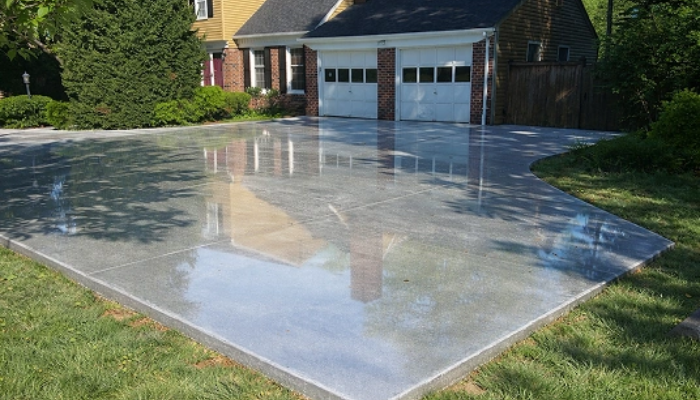
A patio should give you a comfortable, attractive space for outdoor living. However, standing water can quickly turn that space into a source of frustration. If you notice puddles after every rainfall, your patio may have a drainage or installation problem that needs attention.
Occasional moisture usually does not create an immediate concern. However, persistent water pooling can damage patio materials, weaken the base, encourage weed growth, and create slippery surfaces. Therefore, homeowners should understand why water collects on patios and know when professional help makes sense.
At JP Companies Inc., professionals can evaluate hardscape drainage concerns and help homeowners protect their outdoor spaces with practical solutions.
Why Does Water Pool on a Patio?
Several issues can cause water to collect on a patio. Understanding the cause helps you choose the right solution instead of simply treating the visible puddle.
Poor Patio Grading
Proper grading directs rainwater away from the patio and toward an appropriate drainage area. When installers create an incorrect slope, water can move toward the center of the patio instead of flowing away from it.
Over time, soil movement, settling, or erosion can also change the original grade. As a result, previously effective drainage may stop working properly.
An Uneven or Settled Base
Patios rely on a properly prepared base for stability. If installers fail to compact the base correctly, sections can settle after installation. Heavy rainfall can accelerate this process by moving soil and creating low spots.
These low areas naturally collect water. You may notice uneven pavers, sinking sections, or puddles that remain long after the surrounding patio dries.
Clogged Drainage Systems
Some patios use channel drains, catch basins, or other drainage features to move water away from the surface. Leaves, dirt, mulch, and other debris can block these systems.
Fortunately, regular cleaning can often restore proper water flow when debris causes the problem. However, persistent pooling may indicate a deeper drainage issue.
Soil and Landscaping Problems
Your surrounding landscape can also influence patio drainage. Compacted soil may absorb water slowly, while raised planting beds can redirect runoff toward the patio.
Similarly, downspouts that discharge too close to the patio can send large amounts of water onto the surface during storms. Therefore, homeowners should examine the entire area rather than focusing only on the puddle.
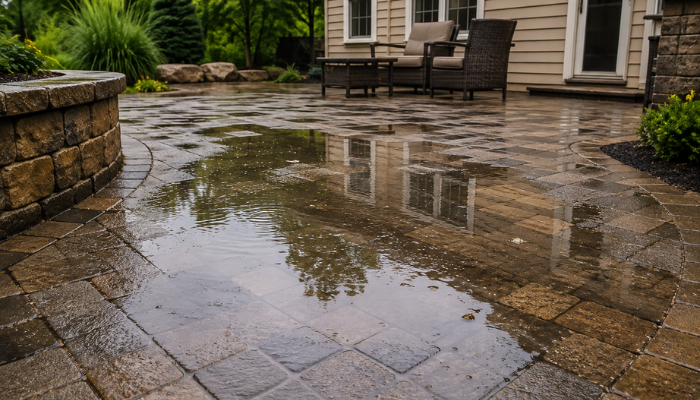
What Does Standing Water Mean for Your Patio?
A small puddle that disappears quickly may not indicate a major problem. However, water that remains for hours or returns after every rainfall deserves closer attention.
Persistent standing water can create several problems:
- It can encourage algae, moss, and weed growth.
- It can create slippery walking surfaces.
- It can stain certain patio materials.
- It can weaken joints between pavers.
- It can contribute to soil erosion around the patio.
- It can accelerate surface deterioration.
- It can increase the risk of frost-related damage in colder climates.
Furthermore, recurring water problems can affect nearby landscaping and foundations if runoff consistently moves in the wrong direction.
When Should You Call a Hardscape Contractor?
You can handle simple maintenance tasks yourself, such as clearing debris from a visible drain. However, you should consider professional assistance when the problem continues after basic maintenance.
A qualified Hardscape Contractor can inspect the patio, identify drainage patterns, evaluate the base, and recommend an appropriate solution.
You should especially consider professional help when you notice:
Puddles after Every Rainstorm
If water consistently collects in the same locations, the patio likely has a grading or low-spot issue.
Sinking or Shifting Pavers
Loose, uneven, or sunken pavers often indicate movement within the base. A professional can determine whether the affected area needs repair or more extensive reconstruction.
Water near Your Home
Water that flows toward your foundation can create a more serious concern. Addressing the drainage problem early can help protect surrounding structures and landscaping.
Cracked or Damaged Surfaces
Repeated exposure to moisture can contribute to deterioration, especially when poor drainage combines with seasonal temperature changes.
Drainage Repairs Keep Failing
If you repeatedly clean drains or make temporary adjustments without solving the problem, you may need a more comprehensive drainage evaluation.
How Professionals Solve Patio Drainage Problems
A Hardscape Contractor can use several approaches depending on the cause of the pooling.
Correcting the Grade
Professionals may remove and reinstall sections of the patio to create a more effective slope. This approach can restore natural water flow when poor grading causes the problem.
Repairing the Base
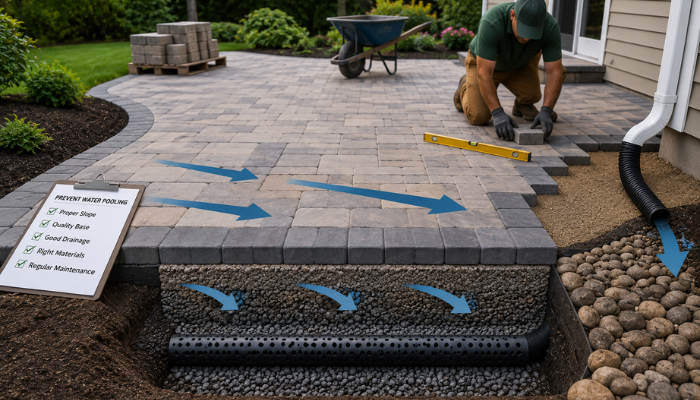
If settling created low spots, professionals may remove affected materials, rebuild the base, compact each layer, and reinstall the patio surface.
Installing Drainage Features
Some properties need additional drainage systems. Channel drains, catch basins, French drains, or other solutions can redirect excess water toward a suitable discharge point.
Managing Downspouts
Professionals can also review downspout locations and drainage paths. Redirecting concentrated roof runoff can reduce the amount of water reaching the patio.
Improving Surrounding Landscape Grades
Sometimes, the patio itself does not cause the problem. Nearby soil or planting areas may send runoff toward the hardscape. Adjusting the surrounding grade can improve overall drainage.
Learn more: The Biggest Mistakes Homeowners Make When Hiring a Hardscape Contractor
If you plan a new patio, you can prevent many drainage problems before construction begins. Thoughtful design, proper grading, quality materials, and professional base preparation can create a more reliable outdoor space.
How to Prevent Water Pooling on a New Patio
Prevention starts with good design and installation. Before construction begins, professionals should evaluate the property’s existing drainage patterns.
First, inspect the natural slope of the yard. Next, identify downspouts and other sources of concentrated runoff. Then, determine where water should safely exit the patio area.
Quality base preparation also plays an important role. Proper excavation and compaction can reduce settling and help maintain the intended grade.
Additionally, homeowners should consider custom patio-installation options that match their property, drainage needs, and maintenance preferences. Properly installed pavers, concrete, or natural stone can perform well when professionals prepare the foundation correctly.
Regular maintenance also supports long-term drainage. Clean drains, remove debris from joints, watch for settling, and address small problems before they become larger repairs.
Why Professional Installation Matters
Patio drainage depends on several connected elements. A beautiful surface cannot compensate for an unstable base or poor grading.
That is why homeowners should choose an experienced Hardscape Contractor when they need installation, repair, or drainage improvements. Professionals can evaluate the entire hardscape instead of simply treating the visible symptom.
JP Companies Inc. approaches outdoor projects with attention to planning, installation quality, and long-term performance. This approach can help homeowners enjoy patios that remain functional and attractive through changing seasons.
If you want to learn more about the company and its outdoor services, visit our GBP to explore the business profile and customer information.
Signs You Should Not Ignore
Some patio drainage problems require prompt attention. For example, water that repeatedly reaches your home’s foundation deserves immediate evaluation. Likewise, rapidly worsening settlement, significant cracks, or extensive erosion can indicate a larger issue.
Do not wait until a small puddle becomes a major repair. Instead, monitor your patio after heavy rainfall and look for recurring patterns. Early action can often reduce repair costs and protect surrounding areas.
Patio Drainage and Long-Term Outdoor Living
A well-drained patio does more than eliminate puddles. It creates a safer, cleaner, and more comfortable outdoor environment.
When water flows correctly, homeowners can spend more time enjoying their patios instead of dealing with constant clean-up or repairs. Proper drainage also helps protect landscaping, hardscape materials, and nearby structures.
Whether you need to repair an existing patio or plan a new outdoor living area, professional guidance can make a significant difference. JP Companies Inc. can help homeowners understand their options and choose practical solutions for their properties.
FAQs
1. Why does water keep pooling on my patio?
Water usually pools because of poor grading, settling, clogged drainage, or runoff from nearby areas. A professional inspection can identify the exact cause and determine the appropriate solution.
2. Can I fix a small patio puddle myself?
You can clear debris from drains and remove leaves or dirt from the surface. However, persistent puddles may require grading, base repairs, or drainage improvements. In those situations, contact a qualified Hardscape Contractor.
3. How quickly should I address standing water?
You should investigate recurring standing water as soon as you notice it. Prompt attention can help prevent surface damage, erosion, weed growth, and more extensive drainage problems.
4. Can new patio installation prevent water pooling?
Yes. Proper grading, base preparation, drainage planning, and professional installation can significantly reduce the risk of water pooling. However, surrounding landscape conditions also influence drainage performance.
5. Does every patio need a drainage system?
No. Many patios can direct water effectively through proper grading. However, properties with heavy runoff, limited slopes, or drainage challenges may benefit from additional systems such as channel drains or catch basins.
Contact Us
Water pooling can start as a minor annoyance, but recurring standing water can signal a problem that deserves professional attention. By addressing drainage issues early, you can protect your patio, landscaping, and outdoor investment. If your patio holds water after rainfall or shows signs of settling, contact JP Companies Inc. to discuss your hardscape needs. A professional evaluation can help you understand the cause and choose a practical solution for a safer, more durable, and better-performing outdoor space.
