
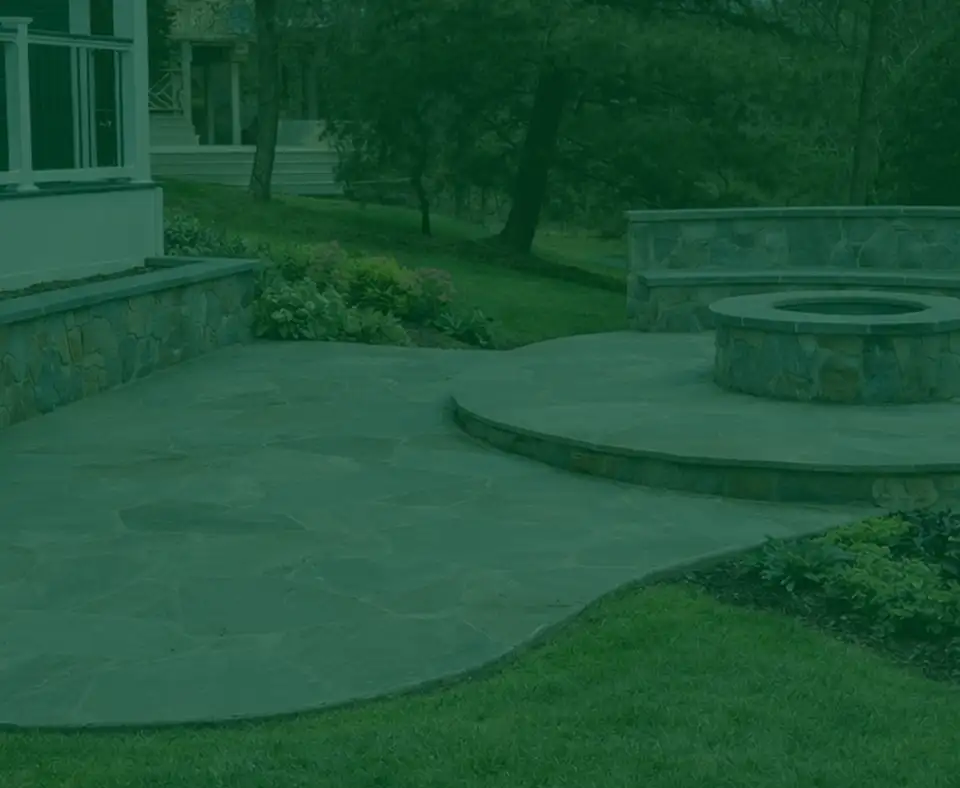
Dry-Set or Wet-Set
Dry-Set
A compacted aggregate base with filter fabric and sand, secured along the perimeter for alignment.
Wet-Set
A 4” reinforced concrete base with the pavers laid over a sand leveling layer.
Pattern and Joints
Pavers are hand-set for consistent spacing and clean alignment, then polymeric sand is activated in the joints to prevent weed growth, erosion and joint movement.
Concrete Pavers and Brick Pavers
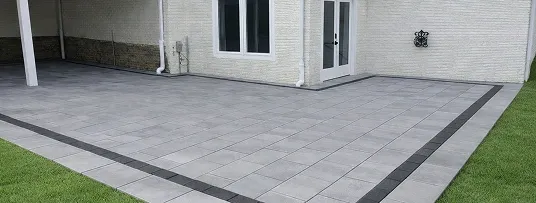
Concrete pavers come in many shapes, sizes, colors and textures, from large modern slabs to tumbled pavers that look aged. A darker border frames the patio.
Standard brick pavers bring a traditional look, with strong load-bearing performance through Virginia seasons, in herringbone, basketweave or running patterns.
Permeable Paver Patios
Permeable pavers let rain soak through the joints instead of running off the patio. They are an option for a patio near the house or where water tends to collect.
The Step Down From the House
A paver patio usually starts at a back door that sits above the yard.
The step down can be a concrete landing with steps, faced in stone to sit well with the pavers; a wood landing is the other option, built by trusted subcontractors we arrange.
Options and Upgrades
A paver patio can grow into an outdoor room: a seating wall with a concrete block core, stone veneer and a stone cap; a stone fire pit as the gathering point; and low-voltage lights in the walls, the steps or along the edge.
If pavers are not the look, JP Companies builds the same kind of patio in concrete or natural stone.
How Long Does a Paver Patio Take?
A small paver patio can take a few days on site. Size, pattern and borders, and any seating walls or fire pit, set the schedule for larger ones, which can take a few weeks.
Herringbone, Running Bond or Basketweave?
Herringbone
Pavers set in a zigzag that locks them together; the strongest pattern and a classic look.
Running Bond
Rows offset like brickwork; simple, clean and good at making a space look longer.
Basketweave
Pairs of pavers set at right angles; a traditional pattern for brick.
Choosing a Paver Color
Pick a paver color that sits between the house and the yard: warm tans and reds with red brick, grays and charcoals with gray or white siding. A border one shade darker than the field frames the patio and hides wear at the edges.
What Is Polymeric Sand?
Polymeric sand is fine sand mixed with a binder. It is swept into the paver joints dry, then misted with water, which sets the binder so the sand firms up in place.
Firm joints hold the pavers against each other and leave less room for weeds and ants than loose sand does.
Where Should a Paver Patio Go?
Most paver patios start at the back door, where they get the most use. Others sit out in the yard to catch the evening sun or a view, joined to the house by a paver path. Think about where the sun is at the hour you will use it most: a patio for morning coffee and one for evening dinners may belong in different spots.
Wherever it goes, the patio should be sloped so rain runs off it and away from the house.
One Paver From the Patio to the Driveway
JP Companies also builds paver walkways and paver borders on concrete driveways, so the patio, the path to it and the edge of the driveway can share one paver and one color.
Frequently Asked Questions
What keeps pavers from shifting?
JP Companies keeps pavers from shifting with a solid base, an edge secured along the perimeter and polymeric sand in the joints.
Do you build permeable paver patios?
Yes. Permeable pavers let rain soak through the joints instead of running off.
How long does a paver patio take?
From a few days to a few weeks on site, depending on the size and what goes with it.
Which paver pattern is strongest?
Herringbone. The zigzag locks the pavers together and resists shifting.
What is polymeric sand?
Fine sand mixed with a binder that sets when it is misted with water, so the paver joints stay firm.
Planning a Paver Patio?
Bring the color and pattern ideas you have, or none at all, and we will walk the yard with you and lay out the options.