
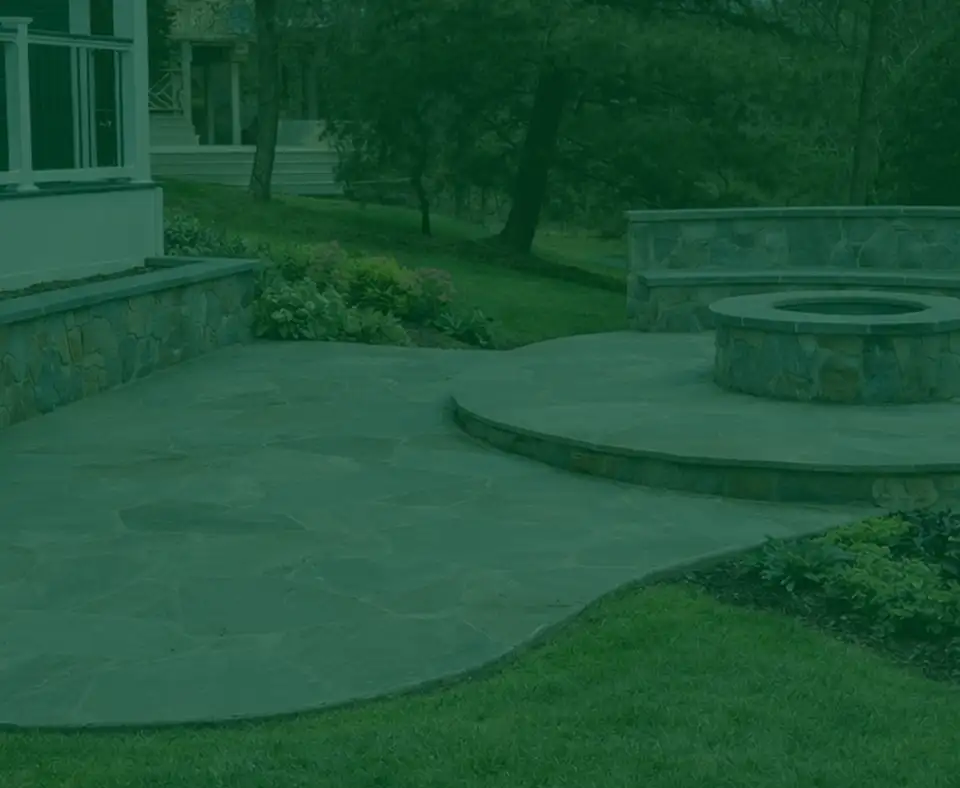
How a Stone Patio Is Built
Reinforced Foundation
A 4” reinforced concrete base over compacted aggregate.
Mortar Bond
A 1” Portland cement setting bed bonds the stone to the base.
Mortar Joints
Mortar fills every joint.
Cleaned Finish
A careful cleaning brings out the stone’s natural color.
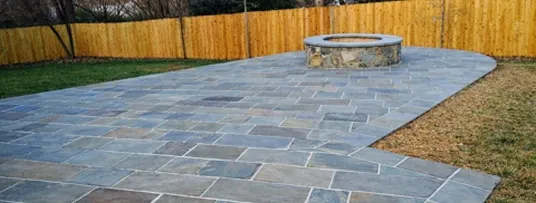
Stone for a Patio
Flagstone and Bluestone
The classic patio stone, in irregular pieces for a natural look or cut pieces for a tailored one.
Travertine
Warm cream and tan tones with a soft, textured face.
Marble
A refined stone for a formal terrace.
Thicker Stone and Caps
Every stone comes in more than one thickness. Thicker stone, and thicker caps for steps, landings and seating walls, are an upgrade.
Fire Pits and Seating
A stone patio pairs naturally with a stone fire pit and seating walls faced in stone veneer.
The Step Down From the House
A stone patio is often the reason to rebuild the steps from the house.
Stone steps from the back door, set in the same stone as the patio, tie the two together. Under them sits an engineered concrete landing; where wood suits the house better, a wood landing can be arranged through trusted subcontractors.
How Long Does a Stone Patio Take?
Natural stone is fitted and set by hand, so a stone patio takes longer than concrete: from a few days for a small terrace to a few weeks for a large one with walls and steps.
Natural Stone in Sun and Shade
Dark stone like bluestone gets hot in full afternoon sun, while lighter stone like travertine stays cooler underfoot. For a patio in full sun that will see bare feet, the color of the stone matters.
In shade, any stone can grow moss or mildew where it stays damp. An occasional cleaning keeps it looking right, and good drainage away from the patio keeps it drier.
Irregular or Cut Stone?
Irregular flagstone, fitted piece by piece like a puzzle, gives a relaxed, natural patio. Cut stone in rectangles and squares gives straight lines and a more formal terrace. The base and the mortar bond are the same either way.
Flagstone or Bluestone: What Is the Difference?
Flagstone is the broad name for flat stone split into slabs, in colors from tan and rust to gray. Bluestone is one kind of flagstone: a dense stone with a blue-gray color, sold in irregular pieces or cut to size.
JP Companies sets both the same way, on a 1” Portland cement setting bed over the concrete base, so the choice comes down to color and the look of the house.
Stone Patio or Paver Patio?
A stone patio is set in mortar and every piece is different, so no two patios look alike. A paver patio is laid in a pattern from pieces made to set sizes, with polymeric sand in the joints, and gives more control over color. A concrete patio is one smooth surface with the least upkeep, poured the same way as a JP Companies driveway.
Planning the Size of a Stone Patio
Start with what the patio is for. A table for six, a grill, or a ring of chairs around a fire pit each need room to move around them, and a patio that fits the furniture on paper can feel tight once people sit down.
Marking the outline on the ground with paint or a garden hose lets you stand in the space and adjust it before anything is built.
Frequently Asked Questions
Why set a stone patio on concrete instead of gravel?
A concrete base with a mortar bond keeps natural stone from settling and shifting, so the patio stays level.
Which stones can I choose for a patio?
JP Companies sets flagstone, bluestone, travertine and marble patios, with thickness options for each.
How long does a stone patio take?
From a few days to a few weeks on site, depending on the size, the stone and what goes with it.
Does bluestone get hot in the sun?
Yes, dark stone like bluestone gets hot in full afternoon sun. Lighter stone like travertine stays cooler underfoot.
Is bluestone a type of flagstone?
Yes. Bluestone is a dense, blue-gray kind of flagstone, sold in irregular pieces or cut to size.
Thinking About a Stone Patio?
Tell us which stone caught your eye and where the patio would go, and we will come look at the space with you.