
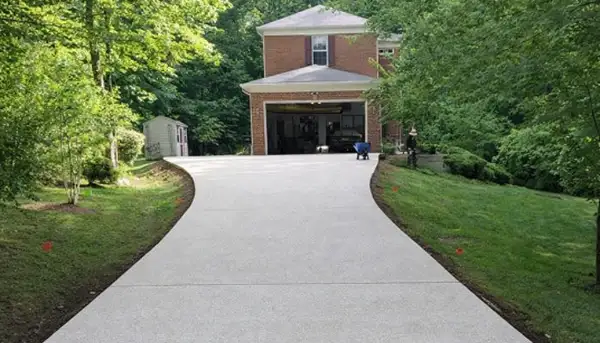
A new driveway in Northern Virginia costs roughly $7 to $50 a square foot installed, and almost all of that range comes down to two choices: the material on top and what goes under it. Asphalt is the least expensive hard surface, concrete sits in the middle, and pavers cost the most, with permeable pavers at the top.
What Does a New Driveway Cost per Square Foot?
| Driveway Material | Installed Cost per Sq. Ft. | Typical Lifespan | Upkeep |
|---|---|---|---|
| Asphalt | $7 – $13 | 15–20 years | Moderate |
| Concrete | $10 – $18 | 25–30 years | Low |
| Pavers on a compacted aggregate base | $20 – $30 | 30+ years | Moderate |
| Pavers on a concrete base, or higher-end pavers | $30 – $50 | 30+ years | Moderate |
| Permeable pavers | The highest of the paver options | 30+ years | Moderate |
| Gravel | $2 – $6 | 10–15 years | High |
The lower numbers in each range are for a simple installation on a compacted aggregate base. Higher-end pavers and a concrete base under them raise the price, and permeable pavers cost the most because of the deeper excavation and the open stone base they need.
What Makes One Driveway Cost More Than Another?
Two driveways of the same size can be priced far apart. These are the things that move the number:
- Tear-out and haul-away. Breaking out an old concrete or asphalt driveway and trucking it away is real work, and thicker old slabs take longer.
- The ground underneath. Soft, wet or clay soil may need more stone under the new driveway to give it a firm bed.
- Access. A wide-open front yard is quicker to work in than a narrow side driveway between two houses.
- Shape. Curves, flared sides and turnarounds take more forming than a straight rectangle.
- Finish. A broom finish is standard; stamped concrete and exposed aggregate take more labor.
- What goes with it. A new walkway, stone front steps or a paver border add to the total, but cost less done at the same time than as separate jobs later.
How Long Does Each Driveway Material Last?
Concrete and pavers outlast asphalt and gravel by a wide margin. A concrete driveway built by JP Companies typically lasts 25–30 years with standard homeowner care, and needs little more than an occasional wash.
Asphalt needs sealcoating every few years to keep the surface from drying out and cracking, and it softens in summer heat. Pavers can last longer than either, but their joints need attention from time to time. Gravel is the cheapest to put down and the most work to live with: it ruts, spreads into the lawn and needs regrading.

Is a New Driveway Worth the Money?
For most homes, yes. The driveway is often the largest surface a visitor sees from the street, and a cracked, stained or sunken one makes an otherwise well-kept house look tired. A clean new driveway is one of the most visible improvements a homeowner can make, and it is one that buyers notice when a house goes on the market.
There is a practical side too. A driveway that pools water, has trip edges or is too narrow for two cars costs time and patience every day it stays that way.
How JP Companies Builds a Concrete Driveway
The price of a concrete driveway buys its build. JP Companies lays 2–4” of compacted 21A or 57 stone, reinforces the slab with 6” x 6” welded wire mesh and pours 4” of 4,000 PSI concrete, with control joints cut every 8–10 feet. A typical replacement takes one to two days on site. See concrete driveway replacement for the full process.