
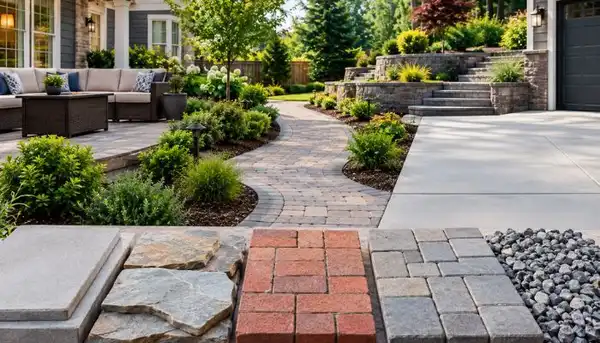
The right hardscape material for a Northern Virginia home is the one that suits the house, the budget and how much upkeep you want, built on a base that can handle clay soil and freeze-thaw winters. Concrete, pavers, brick and natural stone all do well here when they are built right.
Concrete
Poured concrete is the workhorse: strong, low-maintenance and the most affordable hard surface after asphalt. A broom finish is plain and safe underfoot; exposed aggregate shows the stone in the mix; stamped concrete imitates slate, stone or brick. Best for: driveways, large patios, walks that need one smooth surface.
Concrete Pavers
Manufactured pavers come in every shape, size and color, from large modern slabs to tumbled pieces that look old. They are dense and hard-wearing, and a damaged one can be replaced on its own. Best for: patios, walks, driveway borders, anywhere pattern matters.

Brick Pavers
Brick pavers bring the warm reds and browns of traditional houses and look right laid in herringbone or basketweave. Best for: front walks and patios on brick and colonial homes.
Natural Stone
- Bluestone: dense, durable, blue-gray; the classic choice for steps and walks in the region.
- Flagstone: flat natural stone in irregular or cut shapes for a relaxed or formal look.
- Travertine: cream and tan, with a soft, textured face.
- Marble: the most formal choice, for refined entries and terraces.
Best for: front steps, walks and patios where the finish matters most.

Which Hardscape Trends Are Worth Following?
- Outdoor rooms: patios planned with seating walls, a fire pit and lighting as one space.
- Large-format pavers with tight joints for a clean, modern look.
- Mixed materials, used with restraint: concrete with a stone border, or a paver patio with a bluestone cap.
- Permeable pavers that let rain soak in instead of running off.
- Lighting planned from the start, built into steps and walls.
The trend to avoid is using too many materials at once. One main surface and one accent almost always looks better than four.
What Matters More Than the Material
In Northern Virginia, the ground under a hardscape does more damage than anything that happens on top. Clay soils swell and shrink, and winters freeze and thaw water many times over. A firm, compacted stone base, the right slope and a solid edge decide how long any material lasts. JP Companies builds on 2–4” of compacted 21A or 57 stone and sets pavers and stone on a reinforced concrete base.