Skip to content
JP Companies logo
  • Home
    • About Us
    • Why Choose Us
    • Driveways
    • Concrete
    • Walkways & Steps
      • Concrete Walkways
      • Paver Walkways
      • Stone Walkways
      • Stone Front Steps
    • Patios & Hardscapes
      • Concrete Patios
      • Paver Patios
      • Stone Patios
      • Seating Walls
    • Community & Commercial
  • Projects
  • Our Gallery
    • Understanding Concrete
    • Blog
    • Testimonials

(703) 327-7007

Contact Us

The Best Time of Year to Pour Concrete in Northern Virginia

  • JP Companies Inc.
  • September 16, 2026
  • 7:31 am
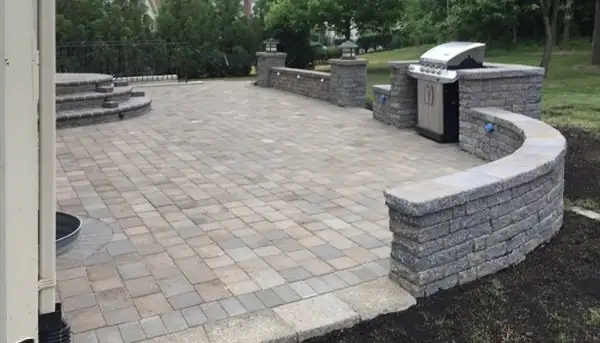
Tan and gray paver patio with a curved block seat wall, lantern-topped pillars, a built-in grill station and curved steps
  1. Home
  2. Blog
  3. The Best Time of Year to Pour Concrete in Northern Virginia

Spring and fall are the easiest seasons to pour concrete in Northern Virginia, because mild temperatures let new concrete cure slowly and evenly. Summer and winter pours are possible too; they just take more care, and the weather has more say in the schedule.

Why Does Temperature Matter to Concrete?

Concrete hardens through a chemical reaction with water, not by drying out. That reaction runs best in mild weather. Too much heat speeds it up and dries the surface before the slab underneath catches up; cold slows it down, and freezing can stop it and damage the surface for good.

Spring

Spring brings comfortable temperatures and plenty of daylight, which makes it a popular time to replace a driveway or build a patio before summer. The tradeoff is rain: spring storms can push a pour back a day or two.

Light gray paver patio with an outdoor sectional and a low block seat wall with pillars, beside spring flower beds and a tree in pink bloom

Summer

Summer concrete is common and perfectly sound when it is handled right. On hot days the main risk is the surface drying too fast. Keeping new concrete damp helps: in warmer months, lightly misting the surface for 3–5 minutes twice a day supports proper curing.

Fall

Fall is often the best season of all: cool nights, warm days and drier weather. A driveway or patio poured in early fall has time to cure before the first freeze, and a patio is ready for the next spring.

Winter

Winter pours are possible on mild days, but fresh concrete must not freeze in its first days, and it should never be poured on frozen ground. The bigger winter issue comes later: road salt and chemical de-icers are hard on new concrete, so concrete poured late in the year needs extra care through its first winter.

How Does Rain Affect a Pour?

Light rain after the surface has set does little harm. Heavy rain on fresh concrete can pit the surface or wash out the finish, which is why pours are planned around the forecast and sometimes moved by a day.

Do Pavers and Stone Have the Same Limits?

Pavers set on a compacted aggregate base are less sensitive to temperature than poured concrete, since there is no curing slab. Pavers or stone set in mortar on a concrete base follow the same rules as concrete for the base itself.

When Should You Plan a Project?

Many homeowners use the winter to plan a spring or fall project: measuring, choosing finishes and getting estimates, so the work can start when the weather turns. See concrete driveway replacement and patios and hardscapes.

Frequently Asked Questions

What temperature is too cold to pour concrete?

Concrete work generally needs temperatures above about 40°F and rising, and fresh concrete must not freeze in its first days.

Can it rain on new concrete?

A light rain after the surface has set does little harm. Heavy rain on fresh concrete can wash out the finish, so pours are planned around the forecast.

Can concrete be poured in summer?

Yes. In warmer months new concrete is kept damp, by lightly misting it for 3–5 minutes twice a day, so it cures evenly.

Related serviceConcrete

JP Companies Inc.


Related Articles

  • Concrete Cracks: Causes, Types and When to Worry

    September 2, 2026

    Concrete cracks because it shrinks as it cures and moves with temperature and the ground beneath it. Most cracks are small, harmless and expected. A few are warning signs that something under the slab has changed,…

  • Concrete vs. Pavers: Which Is Right for Your Home?

    August 19, 2026

    Concrete is the better choice when you want a durable, low-maintenance surface at a lower price. Pavers are the better choice when you want pattern, color and the ability to repair one piece at a time, and are…

  • Hiring a Concrete Contractor in Virginia: What to Expect and What to Ask

    May 12, 2026

    Hiring a concrete or masonry contractor in Virginia comes down to three things: confirm the license, compare estimates that describe the same work, and ask what goes under the surface. A contractor who answers those…

  • How to Plan a Paver or Stone Front Walkway

    October 3, 2026

    A good front walkway starts with how people actually move from the car to the door, then picks a material that suits the house and puts it on a base that will not settle. Get those three right and the details,…

Table of Contents

  1. Why Does Temperature Matter to Concrete?
  2. Spring
  3. Summer
  4. Fall
  5. Winter
  6. How Does Rain Affect a Pour?
  7. Do Pavers and Stone Have the Same Limits?
  8. When Should You Plan a Project?

(703) 327-7007

Planning Next Season’s Concrete?

Call (703) 327-7007 or send the form, and JP Companies will help you pick the right time for your driveway or patio.

Contact Us

Watch Our Latest Jobs

Subscribe on YouTube

  • Video still: Old Asphalt to New Concrete Driveway | Before & After | JP Companies

    Old Asphalt to New Concrete Driveway | Before & After | JP Companies

  • Long new concrete driveway with control joints running past a brick house, with trees and fresh mulch along one side

    Long concrete driveway and flagstone steps at a brick house

  • Wide new concrete driveway with control joints leading to a white one-car garage on a brick house

    Concrete driveway to a one-car garage

  • New concrete driveway with control joints leading to a white carriage-style garage door, with a branch toward the front walk and fall leaves on the lawn

    Concrete driveway and curved flagstone walkway

CONTACT US

Contact us today

Get Free Estimate

Get in Touch

  • 43543 Braddock Rd, Centreville, VA 20120
  • (703) 327-7007
  • info@jpcompaniesinc.com

Which service are you interested in?

Sorry, the form did not go through. Please call us at (703) 327-7007.

JP Companies logo

JP Companies is a family-owned and operated masonry and concrete contractor that has been in business since 2007.

  • VA Class A License # 2705118509
  • MD MHIC License #112231

What We Do

  • Driveways
  • Concrete
  • Walkways & Steps
  • Concrete Walkways
  • Patios & Hardscapes
  • Community & Commercial

Company

  • About Us
  • Why Choose Us
  • Testimonials
  • Projects
  • Our Gallery
  • Blog
  • Understanding Concrete

Get in Touch

  • 43543 Braddock Rd, Centreville, VA 20120
  • (703) 327-7007
  • info@jpcompaniesinc.com
  • Our Google Reviews

Contact Us

Areas We Serve

  • Fairfax County, VA
  • Loudoun County, VA
  • Prince William County, VA
  • Montgomery County, MD
  • See all areas we serve

©2026 JP Companies. All Rights Reserved.

  • Privacy
  • Sitemap
Call Contact Us
JP Companies logo
  • Home
    • About Us
    • Why Choose Us
    • Driveways
    • Concrete
    • Walkways & Steps
      • Concrete Walkways
      • Paver Walkways
      • Stone Walkways
      • Stone Front Steps
    • Patios & Hardscapes
      • Concrete Patios
      • Paver Patios
      • Stone Patios
      • Seating Walls
    • Community & Commercial
  • Projects
  • Our Gallery
    • Understanding Concrete
    • Blog
    • Testimonials

Contact Us